
Microvascular Changes in Primary Open-Angle Glaucoma Associated with Hypertension: A Prospective OCT-Angiography Analysis
Article Sidebar
Main Article Content
Abstract
Background: Primary open-angle glaucoma (POAG) is a progressive optic neuropathy associated with visual field loss and optic disc cupping. Although elevated intraocular pressure is the primary risk factor, the contribution of systemic arterial hypertension (HTN) remains uncertain. Optical coherence tomography angiography (OCT-A) enables non-invasive evaluation of retinal and peripapillary microvasculature. This study investigated the association between systemic hypertension and microvascular alterations in POAG using OCT-A.
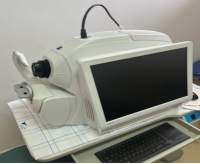
Methods: This prospective observational cohort study was conducted in a tertiary eye care setting and included 40 eyes from 40 adults with confirmed POAG receiving topical anti-glaucoma therapy. Participants were grouped as hypertensive (n=20) or normotensive (n=20). OCT-A imaging was performed using the Cirrus 5000 HD-OCT with Angioplex. Macular and peripapillary vessel density of the superficial and deep retinal capillary plexuses was quantified from 6×6 mm scans. Only high-quality images (signal strength ≥7/10, no motion or segmentation artifacts) were analyzed to minimize measurement bias. Additional assessments included visual field testing, retinal nerve fiber layer thickness, and cup-to-disc ratio. Group comparisons and correlation analyses were performed, with statistical significance set at p<0.05.
Results: Hypertensive POAG patients demonstrated significantly lower macular and peripapillary vessel density compared with normotensive patients (p<0.05). In the hypertensive group, reduced vessel density was associated with progressive visual field deterioration and increased cup-to-disc ratio. These associations were less pronounced among normotensive patients.
Conclusion: Systemic hypertension is associated with greater microvascular compromise in POAG, supporting a vascular contribution to glaucoma progression and highlighting the importance of blood pressure control in glaucoma management.
Downloads
Article Details
Section

This work is licensed under a Creative Commons Attribution-NonCommercial-ShareAlike 4.0 International License.
The Journal is owned, published and copyrighted by the Nigerian Medical Association, River state Branch. The copyright of papers published are vested in the journal and the publisher. In line with our open access policy and the Creative Commons Attribution License policy authors are allowed to share their work with an acknowledgement of the work's authorship and initial publication in this journal.
This is an open access journal which means that all content is freely available without charge to the user or his/her institution. Users are allowed to read, download, copy, distribute, print, search, or link to the full texts of the articles in this journal without asking prior permission from the publisher or the author.
The use of general descriptive names, trade names, trademarks, and so forth in this publication, even if not specifically identified, does not imply that these names are not protected by the relevant laws and regulations. While the advice and information in this journal are believed to be true and accurate on the date of its going to press, neither the authors, the editors, nor the publisher can accept any legal responsibility for any errors or omissions that may be made. The publisher makes no warranty, express or implied, with respect to the material contained herein.
TNHJ also supports open access archiving of articles published in the journal after three months of publication. Authors are permitted and encouraged to post their work online (e.g, in institutional repositories or on their website) within the stated period, as it can lead to productive exchanges, as well as earlier and greater citation of published work (See The Effect of Open Access). All requests for permission for open access archiving outside this period should be sent to the editor via email to editor@tnhjph.com.
How to Cite
References
1. Lee EJ, Kim TW, Weinreb RN, Kim H. Reversal of lamina cribrosa displacement after intraocular pressure reduction in open-angle glaucoma. Ophthalmology. 2013 Mar;120(3):553–9.
2. Miguel A, Silva A, Barbosa-Breda J, Azevedo L, Abdulrahman A, Hereth E, et al. OCT-angiography sdetects longitudinal microvascular changes in glaucoma: a systematic review. Br J Ophthalmol. 2022 May 1;106(5):667–75.
3. Bardi C, Hasnaoui I, Hassina S, Hazil Z, Begnoug C, Serghini L, et al. When Phacomorphic Glaucoma Becomes Phacolytic: A Case Report. Int J Sci Appl Prosper. 2023;1(1):2–5.
4. Chen CL, Zhang A, Bojikian KD, Wen JC, Zhang Q, Xin C, et al. Peripapillary Retinal Nerve Fiber Layer Vascular Microcirculation in Glaucoma Using Optical Coherence Tomography-Based Microangiography. Invest Ophthalmol Vis Sci. 2016 Jul 1;57(9):OCT475-485.
5. Rao HL, Pradhan ZS, Weinreb RN, Riyazuddin M, Dasari S, Venugopal JP, et al. Vessel Density and Structural sMeasurements of Optical Coherence Tomography in Primary Angle Closure and Primary Angle Closure Glaucoma. Am J Ophthalmol. 2017 May;177:106–15.
6. Yarmohammadi A, Zangwill LM, Diniz-Filho A, Suh MH, Yousefi S, Saunders LJ, et al. Relationship Between Optical Coherence Tomography Angiography Vessel Density and Severity of Visual Field Loss in Glaucoma. Ophthalmology. 2016 Dec;123(12):2498–508.
7. Hassina S, Bardi C, Hazil Z, Krichen MA, Abdellah E. Ocular Complication: Post-Traumatic Pyogenic Granuloma about one case. Int J Sci Appl Prosper. 2024;2(1):4–5.
8. Leske MC, Wu SY, Nemesure B, Hennis A. Incident open-angle glaucoma and blood pressure. Arch Ophthalmol Chic Ill 1960. 2002 Jul;120(7):954–9.
9. Flammer J, Konieczka K. Retinal venous pressure: the role of endothelin. EPMA J. 2015;6:21.
10. Hohberger B, Lucio M, Schlick S, Wollborn A, Hosari S, Mardin C. OCT-angiography: Regional reduced macula microcirculation in ocular hypertensive and pre-perimetric glaucoma patients. PLOS ONE. 2021 Feb 11;16(2):e0246469.